
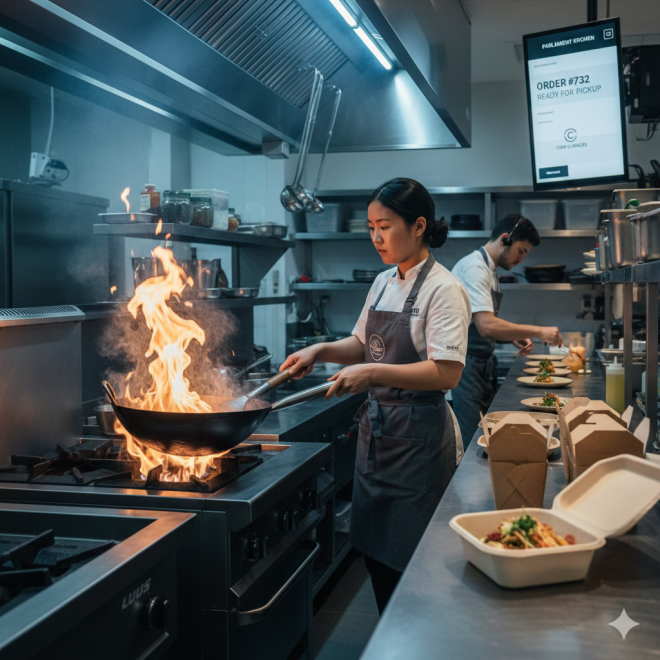
The hospitality landscape in Australia has shifted. As we move through 2025, the “Ghost Kitchen” (or dark kitchen) model has evolved from a pandemic-era trend into a permanent, billion-dollar pillar of the food industry. By removing the high overheads of a traditional dining room, chefs can focus entirely on one thing: culinary excellence.
However, success in a delivery-only model requires more than just good food; it requires the right tools and a powerful digital footprint. Here is your 2025 roadmap to launching a profitable ghost kitchen.
1. Define Your Niche and Concept
In a crowded digital marketplace, “general” food doesn’t sell. Data shows that niche virtual brands—such as keto-friendly comfort food, plant-based street food, or authentic regional Asian cuisine—perform best.
-
The 2025 Trend: Use AI-driven data from delivery apps to identify “cuisine gaps” in your specific suburb before settling on a menu.
2. Invest in High-Performance Equipment
Ghost kitchens rely on speed and consistency. Because you aren’t paying for front-of-house decor, your budget should be redirected toward industrial-grade equipment that can handle high-volume bursts.
-
The Essentials: You will need heavy-duty refrigeration, rapid-cook combi ovens, and high-BTU burners.
-
The Wok Advantage: For Asian-inspired concepts, specialized commercial woks and waterless burners are essential. They allow for the “Wok Hei” flavor while significantly reducing water waste and utility bills—a major factor for 2025 sustainability standards.
3. Build Your Digital Storefront
In a ghost kitchen, your website is your front door. If it’s slow, confusing, or not optimized for mobile, you are losing customers before they even see your menu.
-
Direct Ordering: While apps like UberEats provide reach, they take a massive commission. The most profitable kitchens in 2025 use their own high-converting websites to drive direct, commission-free sales.
-
The Expert Link: Efficiency in the kitchen is only half the battle; efficiency in marketing is the other. Many of our clients utilize experts such as Core Freelancers to manage their SEO and web development, allowing chefs to focus on what they do best: cooking.
4. Optimize for “The Last Mile”
Your food must be designed to travel.
-
Packaging: Invest in eco-friendly, vented packaging that prevents fried foods from getting soggy and keeps heat trapped for at least 20 minutes.
-
Testing: Conduct “stress tests” by cooking a meal and letting it sit in a delivery bag for 15 minutes before tasting. If it isn’t perfect, adjust the recipe.
Ready to start your journey? Explore our range of high-output commercial equipment to give your ghost kitchen the competitive edge it needs to thrive this year.